Fyi, this post turned out to be without much humor and relatively minimal thought to life outside of marathon training. For those who run, I’d love your thoughts. Everyone else, this one will almost certainly bore you right off the page.
—–
While there are a lot of up-sides to life on the road, this is one of the more recent reasons to celebrate the here and now. Our current home is nestled 2600 feet above the coast on the side of a cloud forest mountain. It is rural and jungle and feels miles from everything, which it mostly is. But one of the few places nearby happens to be a world-class, organic, Kona coffee producer. Free tours, free coffee samples, and literally “the best coffee in the world,” as judged by people who know coffee. Seeing how painfully exacting it is made, it is slightly less shocking to see “$55/pound” on the bags for sale on the way out.

With Marathon Day looming large, and most of the training behind me, for better or worse, I’m left wondering if I’ve training enough, trained too much, run enough distance, done enough speed work, timed properly for a peak on October 1 or have set myself up for something less than my best possible performance. But, at least to the extent that I can do anything about it all now, it just doesn’t matter. There is very, very little I can do 20 days out from the race that will significantly improve the results. (Though there is, of course, a lot I could do at this point to hinder my eventual performance.)
With the exception of a couple of the weeks in the mountains, I didn’t hit the total weekly mileage I had anticipated. But, I’m not too worried about my aerobic base. While I didn’t end up doing a 30-miler in the build-up (a good decision, I think), I have logged 15M or longer 14 times in 15 weeks (even with 4 of those weeks without a long run). And 6 runs of at least 20 miles seems about right for a marathon build-up. With just one run of 15 miles left before the marathon, I feel pretty good about my long runs.
Where I think I may have slipped up is the speed work. I had good intentions and, more weeks than not, at least one good speed-oriented session. Interesting to me, the best and most intense efforts were mostly on the treadmill in the first 7 weeks. And, without question, Mike Sandrock in Boulder pushed me hard a few times in Boulder. But the time in Hawaii has me seriously questioning my race fitness: while I felt like I was getting faster in Austin and in the Rockies, I was way off the pace on basically all the speed workouts while in Kona.
A lot will come down to how I’m feeling on race day. If it is cool and dry, as is usually but not always the case for St. George, I think I’m in a position to do well. I’m lean without feeling undernourished, having put on a smidge of squish in Hawaii, thanks to slightly lower mileage, lots of lounging on the lanai, and wonderfully delicious and generous cooking by my mother-in-law. (Thanks, Marianne!, I think.) I think I’m about as well prepared for the downhills as I can be in 15 weeks of training, having really hit them hard and frequently, with just enough time in between to recover and get stronger.
The upside to the Kona training has been lots of miles on pavement, which has been a solid way to up the mental and physical readiness for a road marathon. It has been since February 2010 that I’ve run a road marathon and the daily miles, mostly along the Ironman Championship marathon course, have toughened me up. I’m not saying that trail is always physically easier but it is more fun and, for that reason, it doesn’t typically force me to push myself into the same place of mental pain. And that’s somewhere I need to be prepared to be, at least for a couple of hours on October 1st. And there’s little I look forward to more.
A couple of things. First, I’m reading Ironman Triathlete Chris McCormack’s autobiography, I’m Here To Win: A World Champion’s Advice for Peak Performance. He’s a compelling guy, in large part due to the non-traditional nature of everything he does. Hardcore, hell yeah. Talented, no question. Thoughtful and creative, like few within or outside of the sports world. But, he’s just not very likable and his writing, while insightful in spots, is repetitive and uninspired.

For triathletes and fans, the book is a must read, as there really hasn’t been another competitor in triathlon who has matched either McCormack’s personality or success . And for other endurance athletes, it had enough in it to justify the time to at least page through for nutrition and training tips. I will say that it has helped me find a bit of motivation over my morning coffee but, as I get to the final chapters, I have to say that “Macca” comes across as entirely self-absorbed, manipulative, and seems to revel in his aptitude in not just beating but in tricking, undermining, and subverting the efforts of even those he considers his friends.
End book review.
I’m also well into Bill Bryson’s, A Walk in the Woods: Rediscovering America on the Appalachian Trail. This book is fantastic – witty, informative, easy to plow through, and bound to put ideas into the head of anyone who has ever slept on the ground. I will, I think, some day venture out into the wilderness and see just how much discomfort I can take over a couple of thousand continuous miles.
Also on the nightstand, the next in a line of great science-investigative-journalist-humor books by Mary Roach, Packing for Mars: The Curious Science of Life in the Void. Another winner. After tackling cadavers, sex, and the paranormal, this is perhaps her least controversial topic but she still manages to find angles to make readers squirm and cringe.
—–
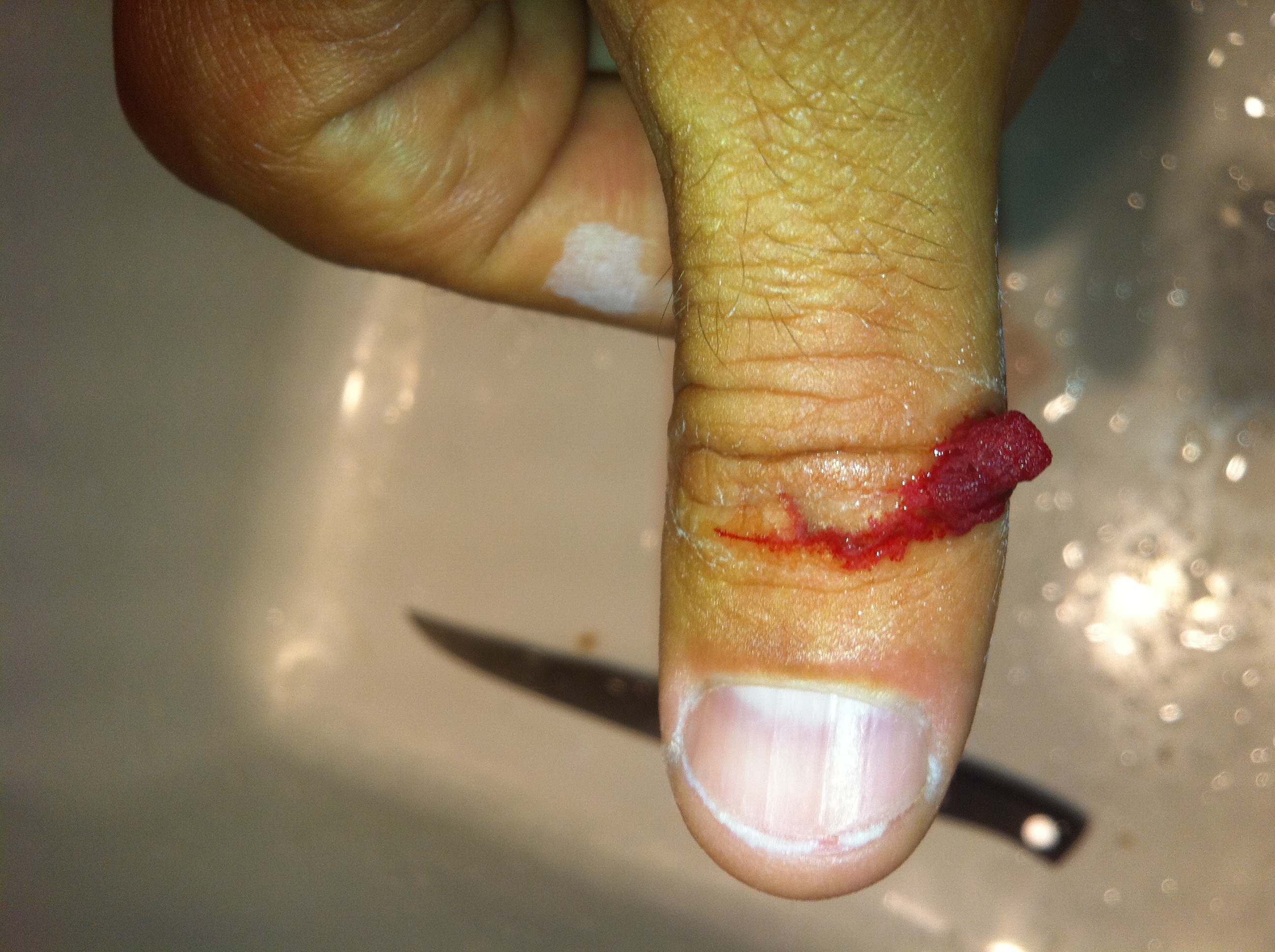
A couple nights ago I cut my thumb while doing dishes. I just HAD to get that last molecule of cheese off the knife and my enthusiastic scrubbing got the best of me. Or at least the back side of the big knuckle on my right hand. The blood started flowing immediately, and heavily. Despite pressure, elevating the hand, and icing for quite some time, the wound was legit and stitches were pretty clearly the right call. But, we were miles from anywhere and it was getting late, and as Alison put it, “We had to go to Dr. Google. We’re living in the jungle here, with no tools but superglue and Internet.”
So, as quickly as we could, we replaced a swapped out the bloody washcloth for a liberal spread of super glue over the wound. It hardened right away, but that didn’t stop a bit more blood from seeping out from the skin, under the Magic Shell-like glue covering. What I had was a mini-geyser of blood, frozen in space and time, jutting out from my thumb. Like a caterpillar-sized crimson sandstone, it took three band aids to cover up the stiff, chunky, protrusion. And I assure you that a stiff, chunky, protrusion is that last thing you want sticking out from any part of your body. The next day, when I was convinced that there was no more congealing to be had, I chipped and snipped away at the blood rock, reapplied more glue, and I’m happy to say that I’m back to having a hardly gruesome, mostly thumb-looking thumb. But here’s where we were at the scene of “the accident,” complete with the offending knife (that was, despite appearances, actually quite a bit larger than the thumb it cut):
Yesterday I ran 26.2 miles. No, not a marathon. A marathon is a race and I was not racing. But I did cover the marathon distance and I choose to do so on the same course where top triathlon athletes from around the world run each October. The Ironman Championship is held in Kona and having now run the marathon course, it is all the more impressive that the elite triathletes do this run, the best in well under 3 hours, after swimming 2.4 miles in the open ocean and riding 112 miles through the harshness of lava-bordered lonely highways. All I had to do was the run and I had all day.
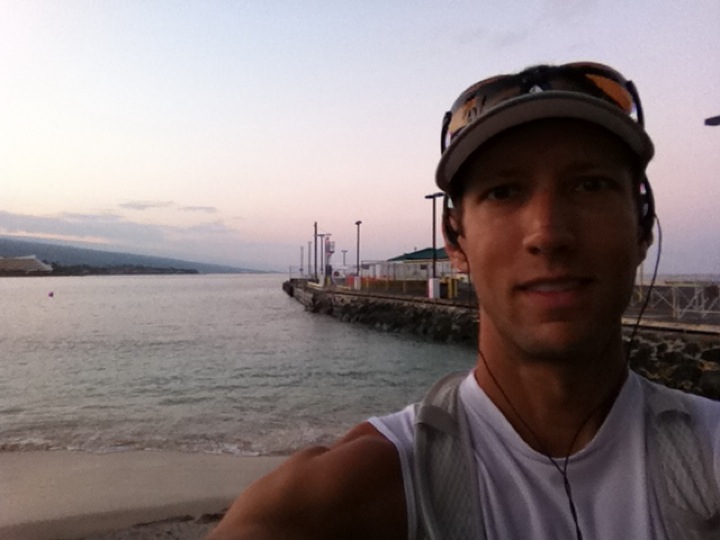
(Below: The day after my long run, Sagan and I went to check out the Lavaman Triathlon. Sagan enjoyed picking berries from the bushes while professional athletes ran right by him, largely unnoticed.)
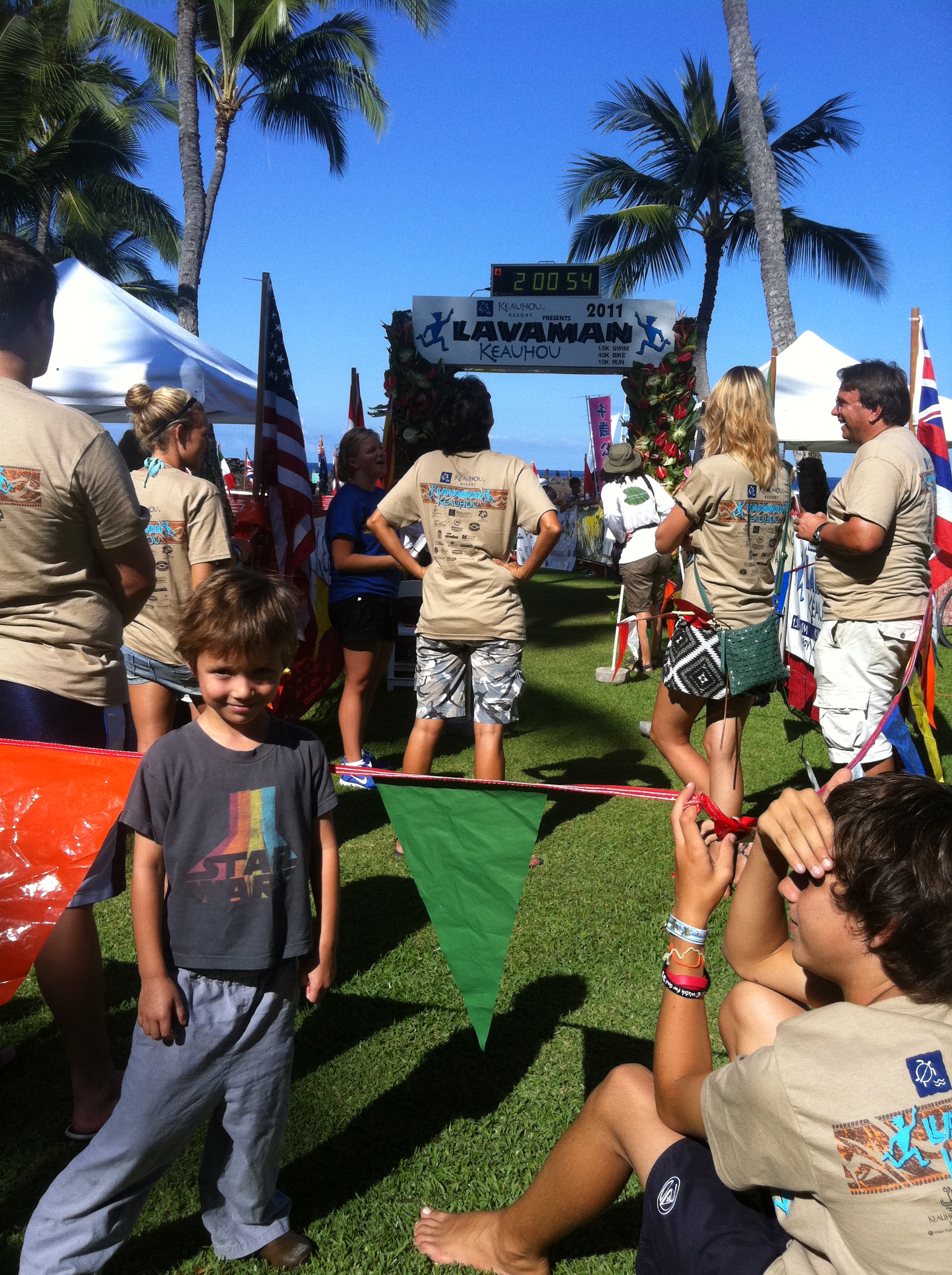
Heading out before sunrise and leaving the famed Kailua Bay pier at 6pm, I felt pretty good despite the rigors of 3 not-so-casual 10 milers in the previous 6 days. Really, there wasn’t much to the run. The vast majority of it was comprised of 2 long out-and-backs, about 11 miles south of town and 15 miles north of town. Most of the miles are along Ali’i drive, a touristy 2 lane beach road, and the Queen K, a major thoroughfare with high speed traffic.
(Below: Beginning the run taking a start photo of myself and feeling a bit dopey, partly from being up hours before sunrise and partly from the embarrassment of taking yet another running geek picture of myself…)
Unlike my rough outing on Thursday, Saturday’s run went according to plan, which was to run as slowly as necessary to complete the route without walking any meaningful pieces. I figured it would take upwards of 5 hours, considering tired legs and heat and the weight of a hydration pack. Breaking from my habit of including far too many mile-by-mile impressions and tribulations and minor successes and failures, here’s how the day went:
I ran and ran and ran, for 4 hours and 29 minutes in total, without anything remarkable happening, good or bad. No big bonk, no runner’s high, no close calls with wildlife or traffic, no injuries or life-changing psychological or emotional break-throughs or break-downs. Just a solid, steady, long run and a lot of “I’m-a-serious-athlete-too” nods from cyclists along the way, most of whom have probably run the same roads during the actual Ironman, or soon will.
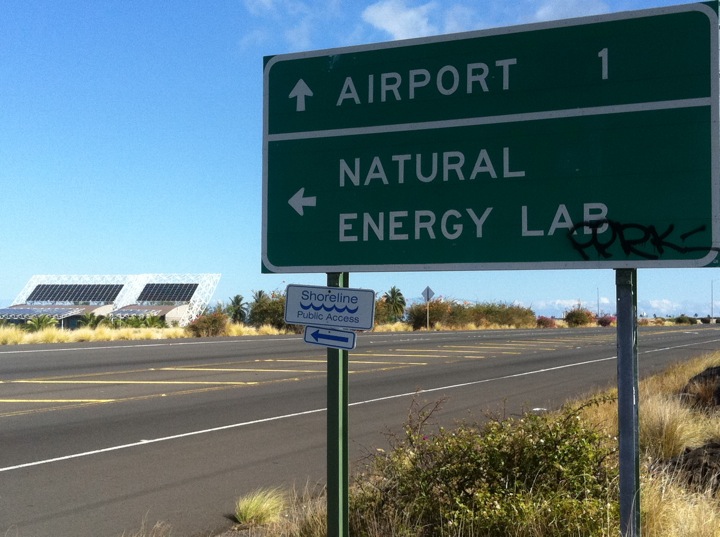
(Below: at the Natural Energy Lab where, when plans failed to generate massive amounts of power from differences in ocean water temperatures, the cold water was put to use to re-acclimate airsick lobsters flown in from the Atlantic, presumably before boiling them alive.)
I must say that there is something special, something slightly bizarre, about running solo down long stretches of highway when nobody else is doing so. It feels extra hard core and sure seems tougher than running around a neighborhood or on a track or in a park or even on mountain trails. Not necessarily more fun (it usually isn’t) or even harder (the track can be a killer). But pretty much unrivaled for gritty masochism. The rush of the traffic, the unrelenting affects of full exposure to the weather, the certain knowledge that many of the cars rushing past will cover fewer miles that day than I will, while being fully dependent on my fitness, determination, and planning. This was only the second time I’ve covered the full marathon distance all on the road outside of a race (Questa to Ranchos de Taos, New Mexico in 2009 was the other). Unlike the first time, which took 5:15, this time I was able to really run the full distance, clocking a 9:11 mile 25 and, after completing the 26.2 mile planned run, even finding some energy to run-walk another 1.25 miles back to the car.
A good morning of running, with some serious tan lines and appropriate (but not horrible) soreness to remind me that 26.2 miles is a serious run, even when taking it easy. Today, other than an easy 3-miler to stretch out, was all pizza and pancakes – guilty pleasures that I’ve been avoiding in the final stretch of this training block. Tomorrow back to training. And more broccoli, less cheese.
On Tuesday, after successfully sleeping away anything that might have otherwise resembled jet-lag from the nearly 8 hours of flying the previous day, I woke up in Kona ready to run. My training progression includes a downhill run once a week, with mileage steadily building. Since the St. George Marathon has some long downhills, including most of the second half of the race, I want to get my leg, ankle, and hip muscles used to the constant impact for miles at a stretch. Tuesday called for 10 miles downhill and we happen to be situated in a place basically made for the workout, with a super long, winding, nearly all downhill road that starts high in the cloud forest and ends basically at the ocean.
(The following pic has nothing to do with this post. Not sure about the scope of services offered by the wedding planners in the greater Kona metropolitan area.)
Dropped off by Al near the top, I had a blissfully fast, relatively easy run that covered 10 miles in just 68 minutes. I ran the 6th mile in just 6:27; the slowest mile, at 7:03, was still well under marathon race pace. For me, that’s fast, averaging 6:52 per mile despite some forced slow downs due to traffic, steepness of grade, and turns. Still, my 10K split beat my race PR and the total time was, by a long stretch, faster than I’ve ever run the distance. My heart and lungs held up great and while I pushed myself the whole distance, I felt great from start to finish. Well, most of me did. My calves and, to a slightly lesser extent my shins and Achilles tendons , were started getting torn up just a couple of miles in. I could feel the micro-tears in the muscle fibers (this is natural and how muscles get stronger) as I ran. Walking, both immediately afterwards and the entire next day, was more painful than after any run I’ve done before, regardless of the distance.
This was all, for the most part, to be expected. I definitely overdid it a bit, pretty much ignoring what was inevitable from running nearly as hard as I could on pavement while dropping about 400 feet per mile. With proper recovery (yes, I iced and ate well and slept a lot), the muscles and connective tissue just come back stronger. And stronger is what I want for my marathon. But, there was the matter of another 4 weeks of training ahead, including another 10-miler today, less than 48 hours later.
This morning I got up and, encouraged by only half limping, I was determined to get in the scheduled 10-mile “pace” run. The idea here is to run 10 miles at my projected marathon pace, basically 7:25/mile, but to do so on a more “reasonable” route. I opted for part of the southern portion of the Ironman Championship marathon course, starting in the village in Kailua-Kona, heading 5 miles south on Ali’I Drive, and coming back. This part of the course, from my brief online research, is said to be totally flat. It was not. It is also said to be hot and humid. It was. So, on recently battered legs, with my hydration pack, in temps rising to the mid-80s and sock-drenching humidity, and under the shade-less glare of the Hawaiian sun, I set out, thinking I was going to knock out the run on proper pace.
It is pretty clear where this story is going, or at least it should be to anyone who has set out to do something so clearly beyond his or her capability. I started out with a 7:50 mile, telling myself I was just warming up and I’d speed up as the miles ticked off. That strategy worked, actually. For one mile. The second mile was 7:44 so I just had to keep accelerating for the next 8 miles to hit my time. No big deal. Until I had to run 8 more miles. By mile 3 I was soaking wet, and my body was going straight from warming up to overheating. By the turnaround at mile 5 my average was at 8:30 per mile so I knew that my “pace” run was shot.
How I felt at the turnaround:

Just continuing to run the entire distance back became my new goal. With the exception of slowing to a walk for about 45 seconds late in the run, in order to choke down a gel, I did at least run the whole route. But the 10 miles took 1:34, a 9:30/mile pace. For a long run, that’s moving along well. For a run of similar length with buddies chatting along the way, it is acceptable. But for something that falls in the “speed workout” column of a training plan, it is a failed effort.
Part of me is pissed and worried, with shaken confidence. But really this is a “so what?” sort of situation. The issue, in retrospect, has less to do with my fitness or motivation and more to do with overdoing it on Tuesday and not adjusting the training accordingly. And “failed” workout or not, I did get in 10 solid miles and got to do it running an iconic route in one of the most beautiful places in America. So not exactly a bad day, all considered.
This current training cycle has been full. Full of miles, full of travel, full of adventure. I committed myself to both intensity (hard, speed workouts) and endurance (frequent, long runs) in preparing for the St. George Marathon, in the hopes that I’d be able to handle both quality and quantity of miles in the build-up.
The intense workouts are usually the less interesting ones but without them there’s no chance that my legs will be accustomed to running 7:20-something miles for well over three hours. And they aren’t much fun, with mile repeats (running hard a mile, catching my breath, going again), tempo runs (that get increasingly more uncomfortable for an hour or so), and hill work (painful and sometimes demoralizing). But, in absolute terms, I’m getting faster; a 6-something mile no longer rips me up and downhill I can string quite a few of them together without much cardio pain. But it is the long runs that I enjoy most and I’ve been piling them up recently.
Looking back over the last almost-12 weeks, I tallied up the days I ran at least 10 miles and found that I hit double-digit miles 18 times*. The mix of terrain included high desert mesas and mountain trails, parks, country and cloud forest roads, a solid race, and a few long treadmill runs. The training, especially the long runs, has taken me to some of the most beautiful and diverse areas of the country from home in blazing hot Austin, to mercifully flat but humid St. Louis in the Midwest, to the wide open rolling high desert in northern New Mexico, to the unparalleled Rocky Mountains bordering Boulder, and now to the cool forested slopes and pristinely sandy coast of Kailua-Kona, Hawaii.

64 runs in less than 3 months. In 5 different states, at sea level and over 13,000 feet, with a stocked pack or nothing but shoes and shorts, across thigh-high creeks and patches of snow and traffic and over snakes and around sheep and while running along cyclists and trains and angry dogs . Some running with friends, old and new, and lots of solitary miles through city centers and rugged, remote wilderness, and on the spinning belts of treadmills, which are indifferent to my pain and fatigue and often push me to my physical limits. It has been quite a whirlwind summer and I feel like I’m doing the right things to see what my best performance can be on October 1st.
I have just a handful of really challenging runs planned over the next couple of weeks before I start tapering for the race. Some days I question myself, how I’ll be able to perform on race day, if I’m doing everything just right. But, I know that I’m happy and that these last few months have been some of the most fun, most exciting, most interesting, and most challenging of my life. I wouldn’t trade the experiences I’ve had, even for a big PR, and I can’t say how fortunate I feel to be able to have the support of friends and family, along with the health and motivation, to continually explore the world and my own capabilities.
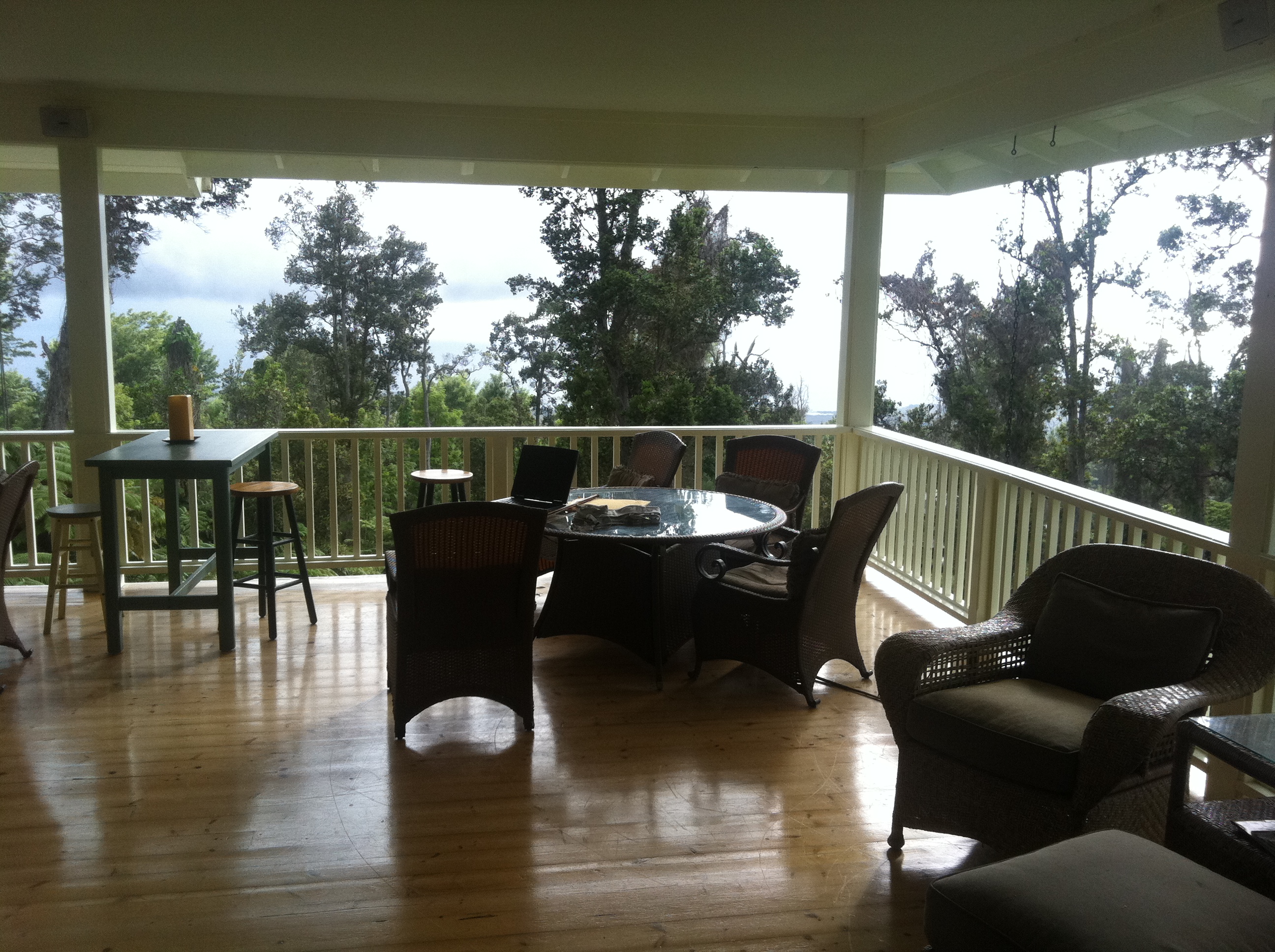
It really is worth mentioning that many – perhaps most – of the phenomenal experiences Alison, Sagan, and I have enjoyed over the last few years have centered around extensive travel to interesting places around the U.S. and the world. The vast majority of the places we’ve gone, including long stretches in Dublin, Edinburgh, Amsterdam, Manhattan, Boulder, Kona, and multiple stays in Taos and Santa Fe, have been arranged through home swapping. While many people unfamiliar with this type of travel question our sanity, I wonder why anyone wouldn’t want to do this. I mean, this is one of the current the views, overlooking the Pacific Ocean from 2600 feet above Kona, Hawaii:
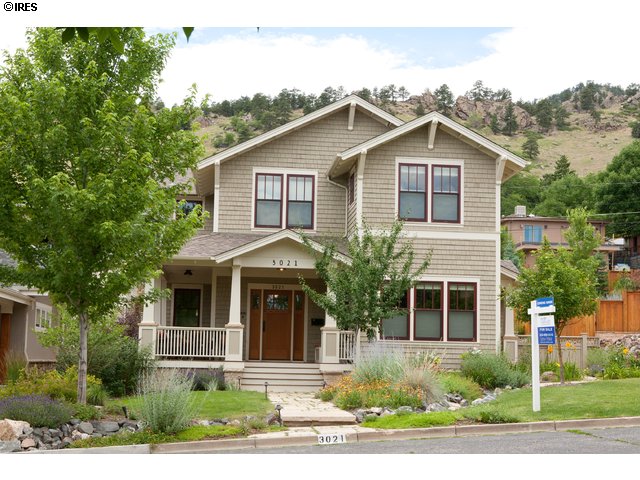
And two weeks ago it was this (Boulder, Colorado):
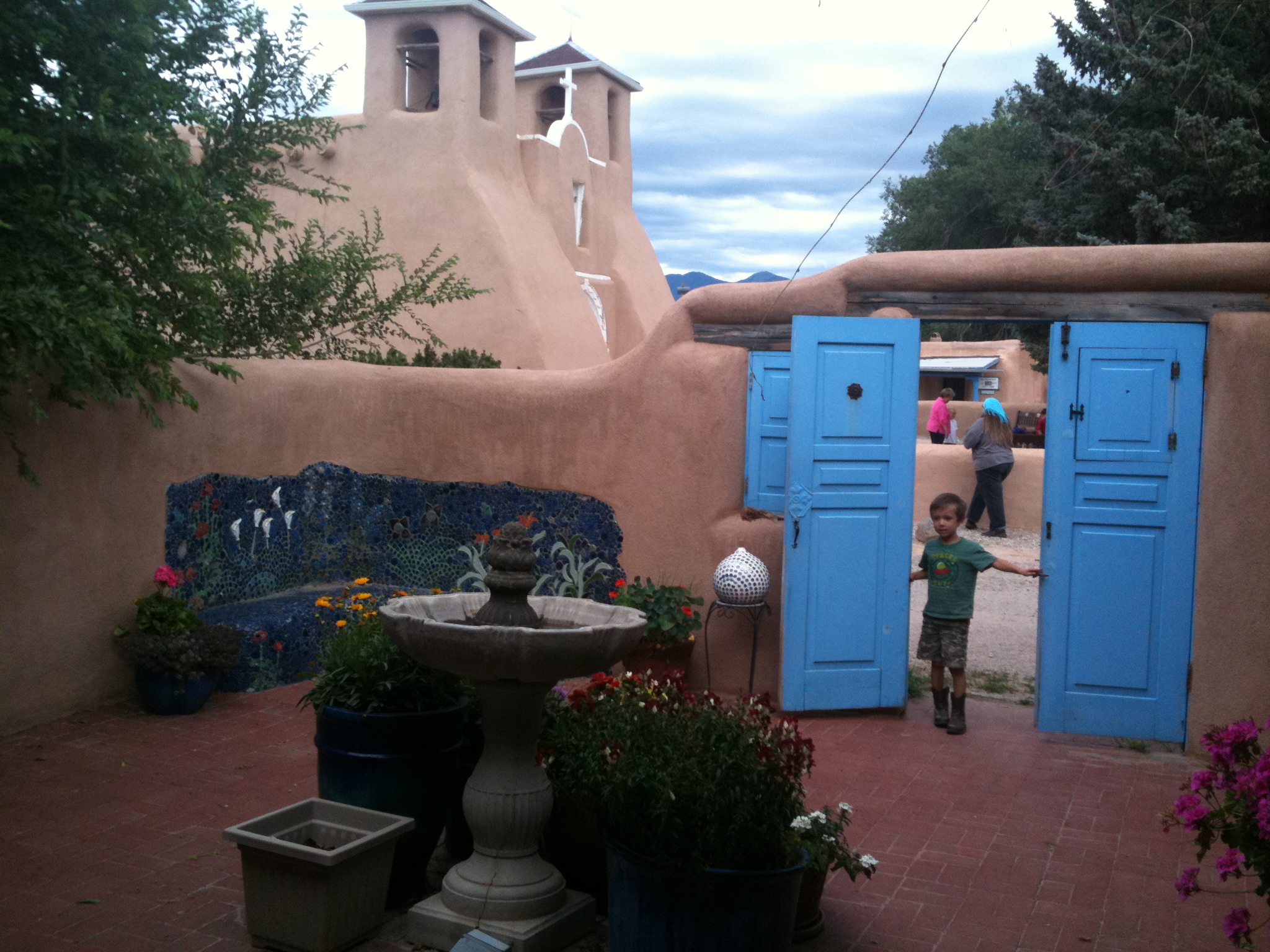
And a month ago it was this (Taos, New Mexico):
—————————————————-
The cost for staying in the gorgeous homes at these remarkable locations? $0.00. That’s right, it’s free. And, unlike the artificial and obscenely expensive hotel experience, we have multiple bedrooms that can accommodate family and friends, full kitchens for making snacks or full meals, space to spread out, and yards to play in, a local experience, and, more often than not, a vehicle to get around and toys for the kid(s). And, depending on the house and location, we’ve had bikes, kayaks, paddleboards, trampolines, snorkel equipment, camping gear, maps, travel guides, workout rooms, DVDs, and, as it so happens on this trip, all-we-can-eat avocados.
The one in the middle is the size of a “normal” grocery store avocado (really, compare it to the bottom of the coffee maker):

For those of you with the lifestyle flexibility to work remotely (internet and phone service is everywhere, you know), there is a whole world of opportunity out there. With many months of exchanges under our belts, Alison and I are enthusiastic advocates of home exchanging and we’re happy to explain more about how it works. Just ask.
———-
*More for my own reference than anything else, here are my days of at least 10 miles over the last 11ish weeks:
6/3 15M Austin
6/10 18M Austin
6/17 10M Austin
6/21 17M Austin
7/1 20M STL
7/8 12M Austin
7/16 30K race Austin
7/19 18M Taos
7/20 21M Taos
7/21 15M Taos/Santa Fe
7/22 15M Santa Fe
7/26 14M Taos
8/4 20M Boulder
8/14 21M Boulder
8/19 12M Austin
8/21 10M Austin
8/23 10M Kona
8/25 10M Kona
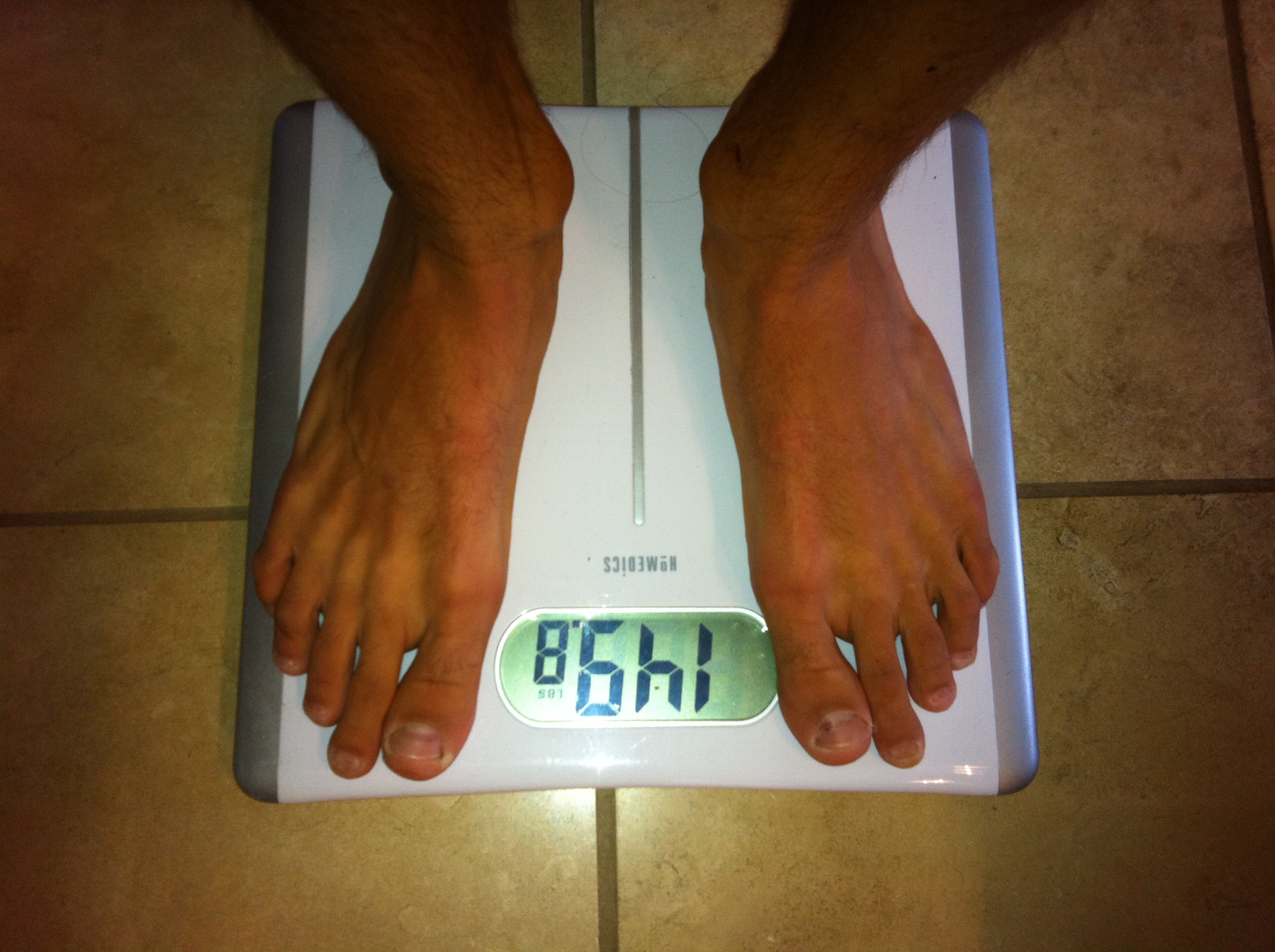
I thought this might happen. For at least a moment in time, as a 36-year-old, 6’0” tall man, I’ve fallen below 150 pounds. This is despite filling myself to exhaustion with rich, fatty foods like avocado and nuts and salmon and eggs and coconut milk, along with daily protein-and-carb-and-nutrient-dense 40-ounce shakes.
If I remember correctly, my half-grown freshman in high school self was about 160 pounds. When lifting weights a lot post-college I got up to a lean 195 pounds. As recently as 2010, when running nearly as much as I am now, I was around 165 pounds. Many non-running friends assume that I’m just “running too much” but, by competitive runner standards, my 40-65 mile weeks (only occasionally spiking higher) are equivalent to the off-weeks. Those guys and gals consistently log 100+ weekly miles and some elite runners are known to do almost twice that.
The upside is that I can probably fit into my Bar Mitzvah suit. And I now look extra svelte in my brand-new racing vest. Sagan and Alison encouraged many, many photo shoot poses but I have to say, for better or worse, this is the one we like best:

When headed out to run a meandering loop that included a pass over the Continental Divide, the semi-plan was to be out for about 3 hours to cover about 15 miles. That sounds slow but bear in mind that we were starting at about 8,000 feet and climbing to over 12,000 feet, with plenty of lesser ups and downs throughout. And the terrain was not exactly speedy – the majority of steps were on and over rock and roots or under tree branches or right through ankle-deep snow melt run-off. In other words, this was just what trail runners think about when going to bed and when waking up, before dark and with insufficient rest, as was the case for this run, like most.
Our large group convened on the outskirts of Eldora, Colorado about 8am. About half of the 10 or so were out for a two-hour run, the rest of us planned another hour. The first hour or so went as planned, with steady climbing and a pace that allowed for comfortable conversation in pairs and threes. A little after an hour in, the 2-hour folks turned back and 5 of us continued on, guided by the intrepid Mike Sandrock, whose boundless energy and enthusiasm were enough to have us all excited about whatever adventure might lay ahead.

As perhaps the least experienced and certainly the least accomplished of any of the runners I spent time with in Boulder, I was somewhat timid about donning my full trail-trekker outfit. It includes a wide-brimmed hat, trail-running shoes, GPS watch, and a pack full of not only water and gels and Advil and salt pills but all sorts of “oh shit” gear crammed in: a lighter, flashlight, jacket, gloves, hat, whistle, compass, pen, knife, pepper spray, baggies, and paper towels. And a few other odds and ends, as I generally prefer to have more than I need rather than dying in the woods.
But, without exception, nobody was stocked like me. Few had more than a small water bottle and most didn’t even have that much. So I felt sort of like a newbie goof-ball in spite of my not insignificant accumulated miles out on trails over the last few years.
About two hours into our run, when we still hadn’t reached what I believed to be the halfway point, I knew we’d be out for a while. Hungry or not, tired or not, I diligently downed a gel every 20 minutes with a couple of ounces of water. Once we hit the three hour point, I was actually feeling really good but I knew that the others had to be starting to fade. And most of the others were striding along in road shoes, which are far from ideal for the rocky, sometimes muddy, usually up or down paths carved out of the mountain sides.
The views and weather couldn’t have been better. Lakes and creeks and snowy bowls and meadows painted in the primary colors of countless blooming flowers, all under a mostly blue sky and 60-something degree dry air. We came across hikers with skis strapped on their backs, en route to the higher points where they could find some runs at the peak of summer.

Close to three hours into the run we crossed the divide, which also granted us surprisingly close views of Winter Park, Colorado. It is always hard, at least for me, to judge distances by sight in the mountains but it was cool to be close enough to see individual chairs on the lift in the not-so-far-distance. Running the route back on the loop was a nice net downhill. Nice, that is, provided you have glycogen left in the legs, trail running shoes, and water. So, I was set and still feeling good but I felt bad for the other guys, who under virtually any other conditions would have been pulling me through the run.
Terrance, who was once one of the top snow shoe racers in the country, seemed indifferent to the long outing but Anders, a strong and super fast 800 meter specialist, was bonking. A few slurps from my water helped him some but by the time he most needed some calories, my gels had run out. Having taken them in for the first 3.5 hours of the run, I knew I had plenty in the tank to get back but it would have been a major suffer-fest for my otherwise, as it surely was for Anders, Paul, and Sandrock, though none of them complained at any point about anything.
Obviously we all made it back, finishing in something over 5 hours for what turned out to be over 21 miles. Once we got fully hydrated and downed some calories, we all felt great. Having had many such runs with Andres Capra, I didn’t think of this one as being particularly “epic,” though it was a lot of fun and definitely qualifies as a long run worth remembering. I found out later that this sort of run is not typical, even for many of the talented runners I spent time with. Sandrock, who I assumed just drinks tea rather than ever actually resting, apparently slept for 16 hours afterwards.
Some time, not too far in the future, I’m hoping that precisely this kind of long run will be a regular part of my life, to be shared with friends, in the mountains, where the land and scenery dictate where we go and for how long. And once I get, say, another 50 such runs in within a 6 month period, I think I’ll be ready to tackle the goal scratching at me from the inside: my first 100-Miler. Leadville 2012, maybe?
Pearl Street is the cultural and social center of Bolder, lined with all sorts of restaurants and shops as well as the courthouse and other downtowny attractions. Tattooed, bedazzled, sometimes talented, sometimes cringe-worthy street performers dance with snakes, juggle knives on unicycles, play harps and clarinets and buckets and banjos, or walk around dressed as “mirror man” or a shaggy dog or robot or, well you get the idea.
Once a year, for about an hour, Pearl Street is home to a 1-mile road race that attracts many of the local speedsters and a number of top international runners who train in the area. The course, along with being at 5430 feet above sea level, is made tougher by virtue of its 6 right-angle turns, a slight uphill for much of the second half, and a sun-filled 90-degree day. I had heard it is a relatively tough one, at least as far as 1-mile road courses go, and it sure seemed to be judging from the pain I was about to endure. I’m not a 1-mile racer and the only one I’ve done in the last few years was in sea-level Austin, in cool weather, with one curved turn, and a slight downhill.
There were waves for mascots (furries!), kids (half mile), masters (all runners over 40), competitive men, competitive women, and “friends and family”. There were fast runners in all categories and it was quite properly suggested by a runner friend Marty that I enter the “friends and family” wave, which he referred to as the “civilians race”. The race for “competitive men,” you see, is for guys who, at a minimum, were high school milers and most have or had mile times that start with “4”. And all but a small handful were younger than me, typically an advantage for running fast. (I’d have ended up #56 out of 60 in that race, I saw afterwards.)
Right before the start of my race, which was to start just after the finish of the kid’s race, I saw a sad Sagan and flustered Alison at the registration table. Earlier, Sagan had dismissed our offer for him to run with the kids but, when he got to the race and saw all the kids finishing, he changed his mind. But, that race was just about over and, at any rate, too late for him to do. Alison saved the day, getting him and herself registered for the “friends and family” race, just before the race started. Since neither had planned to run a race, Al was in jeans and Sagan was wearing cowboy boots.
We all toed the line with 187 other, with me towards the front and Sagan and Al somewhere behind. A mile race is hard. Harder, in some ways, than a marathon or ultra-marathon. There is no real settling in period and, at least for me, pain from the starting gun. I was roughly stuck three deep in the start, having to maneuver around 25-30 others, with some stutter steps and lateral hops. Not exactly ideal in a race where every second counts but I just didn’t feel comfortable elbowing my way to the front of the start line, even in – especially in – the “friends and family” race, where I very much felt like the out-of-towner crashing an iconic, locals-centric race.
As expected, I was hurting within the first minute. My watch stopped working earlier in the day so I was, for the first time in years, running “blind” as far as my pace and distance. Going purely on feel, I was going as hard as I figured I could hold for about 6 minutes. I passed quite a few people and just focused on enjoying the pain and catching people one at a time. I think I ran pretty evenly but was annoyed to see a guy dressed as Scooby Doo ahead of me, even with a quarter mile left. I’m talking fully costumed: no human skin showing, large plush Scooby head, flopping tail, the whole thing. With less than a quarter mile left, I dug in and was determined not to be beaten by a cartoon character, who was, by the home stretch, high fiving every Hanna Barbera fan cheering his name. I passed him with maybe 75 yards to go and powered towards the finish, only to be passed by the brown dog with about 20 yards to go. I pushed as hard as I could but was still out-sprinted by Scooby, who finished seconds ahead of me.
This wasn’t the actually mascot nemesis who beat me but it’s close and the image might give you an idea of the desperation of running as hard as you can and still being BEHIND the one getting steady crowd chants of “Scooby! Scooby!”.

My final official time was 5:47 (though I was 5:45 on the clock as I crossed the line), which was good for 13th place. With a bit better race strategy, I think I could have run 5:40 and broken the top 10 but, given the conditions and my tired legs from recent heavy training, I felt good with the effort. Sometime I’d like to try a mile on the track at sea level to see what I can do. Maybe in the 5:20s?

Much more fun that my race was doubling back to find Al and Sagan and run with them to their finish. Sagan was a bit stumbly in the boots but he was determined to run. With about a third of a mile left, we all three were doing a run-25-steps-walk-ten-steps routine, which kept us moving really well. When we rounded the final bend and the finish line was in view, we all three ran to the end to the cheers of the crowd and encouragement of the announcer, who enthusiastically commented on Sagan’s racing boots. Al and Sagan crossed in under 14 minutes, which was likely closer to 13 minutes since the finishing time didn’t account for the time from the start gun to crossing the start line, a fact that penalizes anyone who isn’t right at the front of the wave.
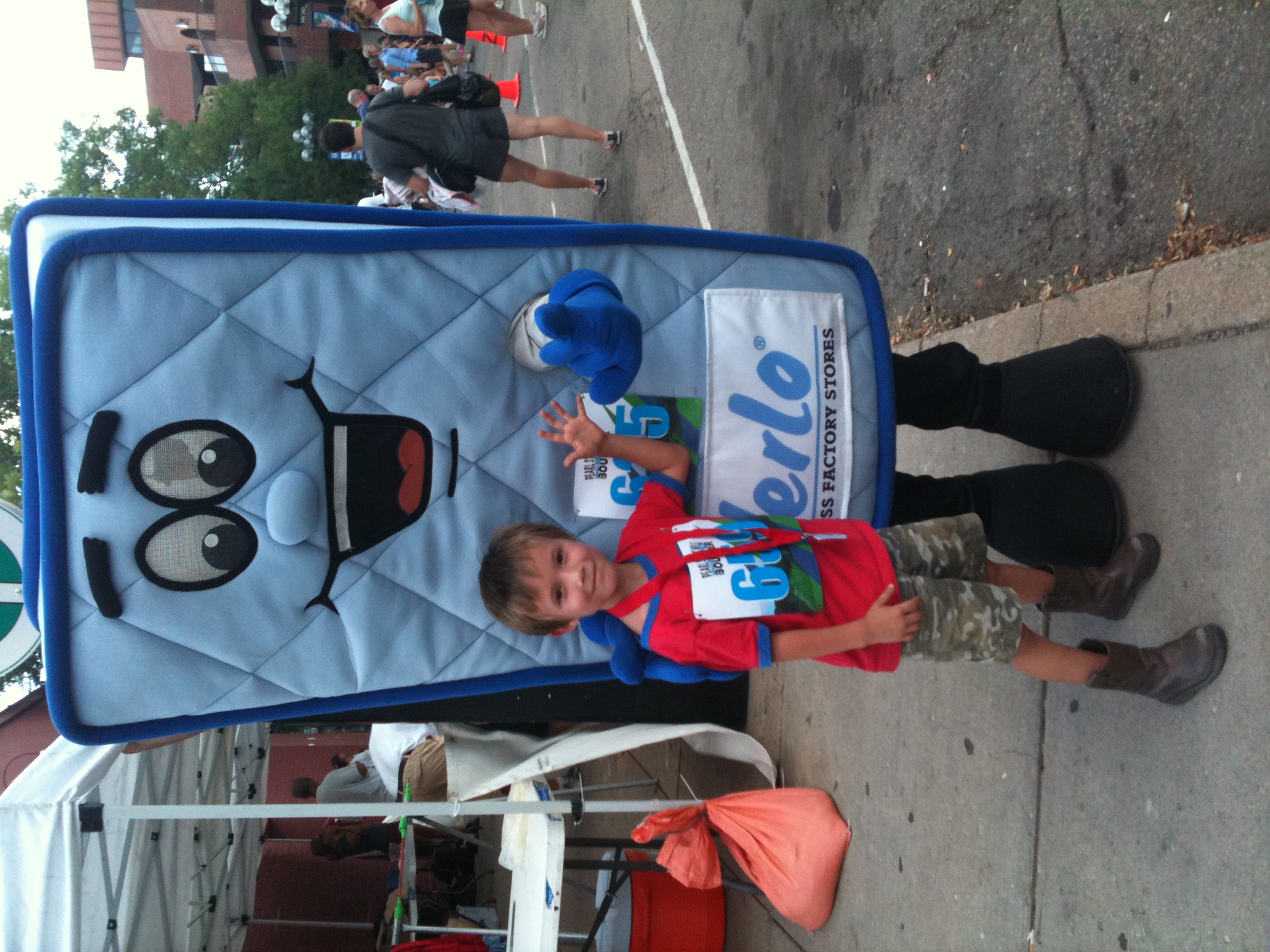
A good day all-around, followed by a nice dinner where pooped-out Sagan fell asleep at the table. And race shirts for all!
It has been a week since my last post, which is about 6 days longer than I had planned for the next Boulder update. There hasn’t yet been anything to diminish my initial excitement and enthusiasm. Not even this:
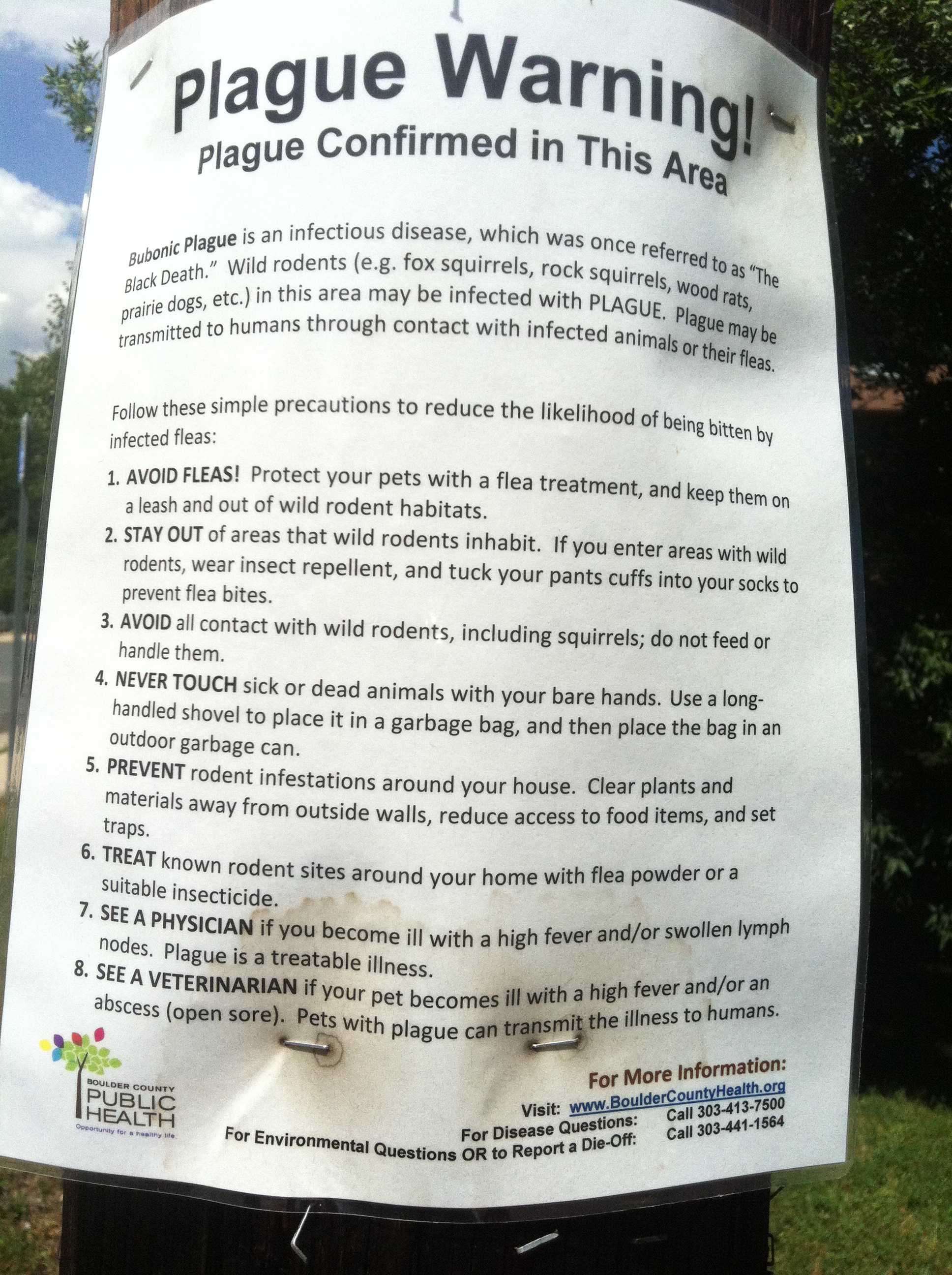
Come on Boulder, if you want to discourage me it is going to take more than “an infectious disease, which was once referred to as ‘The Black Death’.” With or without The Black Death, I still get 65 degree sunny morning mountain-top views, local-raised-and-farmed-organic-free-range-grass-fed-gluten-free-macrobiotic-vegan-and-or-vegetarian-freshly-prepared-food options every corner, and a community of outdoors-loving, progressive-minded, well-traveled, well-educated, healthy and happy fitness enthusiasts. I’m not saying that I want to ooze puss and blood from buboes in my neck and groin but I understand that there are always compromises to make in choosing where to live. And if that’s the trade-off for living in Boulder, it doesn’t seem entirely unreasonable.
This week I’ve had a chance to hit the trails with about 25 different runners over the course of 7 runs. Without exception, everyone has been encouraging, complimentary, and eager to share our own stories about running and the rest of life. The caliber of runner has been, at times, a bit intimidating. Of the ~25 runners, I am THE ONLY ONE who didn’t run competitively in college. A number of them are current college runners. And at least a few are in training for the Olympic trials. I didn’t find out until after our run yesterday that one guy (Peter Hegelbach) I had been talking with about my marathon aspirations had won the Bronze Medal in the 2005 World Championships in the 1500m. But terms like State Championships, Course Record Holders, Olympic Trials Qualifiers, and Marathon Winners have been commonplace enough in the daily running conversations that I’m almost getting used to it.
One correction as I re-read the last paragraph. There was one guy who I don’t think ran in college, a staggeringly humble guy named David Roche. If I got the details right, cobbled together from what I could draw out of him and the stories relayed to me from others we ran with, Dave didn’t really focus on running at all in high school but still made it to the state championship (incidentally as the only white guy in the state, the legend goes) with a 10.6 second 100m. I heard that one of his recent workouts included 12 X 400m at 61 seconds each.

I ran a 10K race this past Saturday, running well even on the uphills, sprinting the downhills, and generally proud of how well I got through it despite being at 10,000 feet. It took me 54 minutes, good for 44th place out of 169 finishers. David won the race, in 39 minutes, and afterwards had little to say about the race other than what a good job I did. If he wasn’t so genuinely nice it would have seemed condescending. But that’s how I’ve found the runners to be here – full of support for one another and easy with the compliments.
The first week here was more mileage than intensity, other than the 10k race. Most miles have been at conversational pace but a 9-miler, 20-miler, 10k race, and 10-miler, all at altitude with lots of mountain trail, in 5 days, will hopefully be as good for my marathon training as the more conventional speed work.
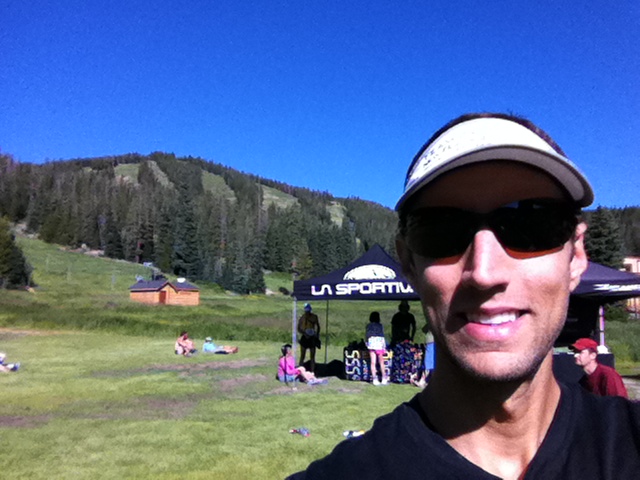
And, yeah, there has been a lot of wonderfulness in my Boulder experience that has little or nothing to do with running. Parks and splash time in the creek with Sagan, great family meals and hikes, visits with the Pfaffs, Simpsons, and Solleys, all friends who have already made the move to spots along the front range, and highlights of quintessentially Boulder-area experiences like the Farmer’s Market, the County Fair, Pearl Street, coffee shops, and restaurants including my new favorite, Sherpas, which is run by, yes, real Sherpas.
Still on tap: Red Rocks, Estes Park, Rocky Mountain National Park, and lots of time in, on, and over dirt, rocks, roots, and leaves.

We got into Boulder at 10am this morning. Within about 45 minutes I was on a trail that runs along Boulder Creek with Marty Kibilosky, the owner of the absolutely stunning house that is our home for the next week. This is another Home Exchange for us and I was lucky enough to cross paths for a couple hours with Marty before they left for our place.
First, a word about the house, neighborhood, and town. Boulder has been on the radar for Alison and me for a few years. For me, it is kind of a no-brainer: mountains, small town, close to big town, and more foodies, baristas, and world class athletes per capita that any place I’m aware of. In another huge Home Exchange score, we’ve found ourselves in perhaps the nicest home that I’ve ever been in. Everything is, well, perfect. It is big without being obnoxious, immaculately clean and well organized without seeming OCD, beautifully furnished with custom everything while still comfy enough for hanging out as a family. I mean, this is the stove:

And we’re located within easy walking distance to downtown Boulder, Pearl Street (fun for tourists and locals), Boulder Creek, parks, and Flagstaff Mountain.
But the real appeal of Boulder is the lifestyle. While Marty and I were out for a 7 or 8 mile run to help orient me to the area, we happened across one of Marty’s running buddies, a tall, easy running fellow named Bill. The three of us ran together for about an hour, during which time I found out just how sub-ordinary my running really is. Especially by Boulder standards. I was a bit out of my element, with guys who each posted 2:20-something marathon PRs in their competitive running days. Bill didn’t even really focus on running much in his college years – his real passion was rock climbing. And they had plenty of stories about their “fast” friends – the ones who were world class and even world record holders (as opposed to being “just” among the best runners in America, as both Marty and Bill have been). I joking asked them if there is anyone in Boulder who hasn’t run a marathon under 2:30 and, missing (or ignoring) my attempt at middling runner humor, they lamented the fact that so many of the runners in Boulder are only in the 2:30-2:35 marathon range. (My goal time for my upcoming marathon is 3:15.)
It is all a matter of perspective. One of their local friends, Frank Shorter, is perhaps the most celebrated American marathon runner in history, winning lots of them, including the gold medal in the 1972 Olympics. There’s also a guy who lives down the street named Dave Scott. He’s a legend in triathlon, having won the Ironman Championship a record six times. Scott Jurek, one of the most dominant guys in the history of ultra-running, is another local. And most of the guys – and gals – in their running groups have bios that include “World Record Holder” and “World Champion” and “Olympian”. The slackers have to settle for just “All American” or “College National Champion”.
Marty, after losing some of his passion for running in his 30s, decided to see how he could do training for the National Championships for the 1-Mile as a 41-year-old (considered the “masters” division). The mile wasn’t his best distance so he wanted to challenge himself.* For a guy who had taken some time off and was running an event other than his strength, he still managed to make it to the finals and place 7th. That’s 7th place master in the NATIONAL CHAMPIONSHIP, which as the name suggests, fields many of the best runners from around the country. Shortly after, he ran in the local 1-miler here in Boulder. He beat his time from Nationals but still ended up in 8th place. And that pretty much sums up the level of athletic talent here.
The average level of motivation and achievement here is mind boggling. These people, who are ridiculously accomplished runners and cyclists and swimmers and climbers and paddlers and skiers and snow shoe-ers are also brilliant business people and writers and artists. Almost all work day jobs. And most are able to be good – even world class – at one or more discipline while raising families, helping communities, and exploring the world, both outside their doors and across the globe.
It is a town where it is easy to be humble and inspired, by the people and the environment. I think it might be home, and I haven’t even been here 8 hours.
*When I mentioned in passing that I used to be more of a weightlifter than a runner Marty said that he, too, got into lifting for a while. He could only bench press 95 pounds when he started. Five years later, he hit his goal, benching 300 pounds, while weighing only 165. I would bet that there was a moment in time where there wasn’t a comparable marathoner alive who could come within 100 pounds of Marty’s bench press and not a comparable weightlifter alive who could come within 30 minutes of his marathon time.

 Kind of Like Fun